Historic Buildings
Fort Myers River District Historic Buildings
Below is a list of historical buildings within The Fort Myers River District.
The Arcade Theater building located between Bay and First Streets was built in 1915 by the Heitman brothers, Harvie and Gilmer. It is part of the Bradford Block and is unique as it offers passage from
Bank of
(French Connection/BSSW)
The Bank of Fort Myers was founded in 1906 as an outgrowth of the
16 Bay View Court (1411)
Constructed prior to 1926 the building was designed with a single, ground floor retail storefront and a separate exterior door providing direct access to the second floor, presumably for office use. Over the years the building has housed many different uses including an abstract and title company, a dry goods store, a clothing shoppe, and chiropractor among others. The building is also interesting as it is near mirror image to the one across from it on Bay View Court.
Bradford Hotel
(Florida Gulf Bank)
The Bradford Hotel was opened on November 12, 1905. The building was constructed by Harvie E. Heitman and was financed by Tootie McGregor, widow of Ambrose McGregor, who had befriended Heitman in the late 1890’s. The hotel was named the
The building was built on the riverfront in 1925 and was used as a fish house, processing facility for several years. The building then sat vacant for many years and was finally re-opened in 1946 as the Dew-Drop Inn Restaurant. Over the next few decades the building was used as a restaurant under various names including in 1966, the Bay Café. The building was purchased in 1988 by Peter Schmid, who opened Peter’s LaCuisine, a fine dining restaurant with the 3rd floor Brick Bar featuring live entertainment. In 1998 the rooftop was converted to the Sky Bar. Peter’s LaCuisine, the Brick Bar, and the Sky Bar closed in early 2002.
The building was erected by Henry Colquitt, a real estate developer from Detroit, Michigan, in 1925, and later sold to W.H. Rynolds, Sr. to be used as real estate offices. Modernized several times, the facade, as you can see in the ornamental stucco work and bell tower, retains the character of the Spanish-Mission style prevalent in the Florida boom years.
The
The original
Earnhardt
(Multiple Businesses)
The
Edison
(Roetzel Andress Law Firm/Franklin Arms Apartments)
The Edison Regency House started in 1889 as the Hill House and was operated by Mary F. Hill. Once a small boarding house, it was gradually expanded to become one of the leading hosteleries in
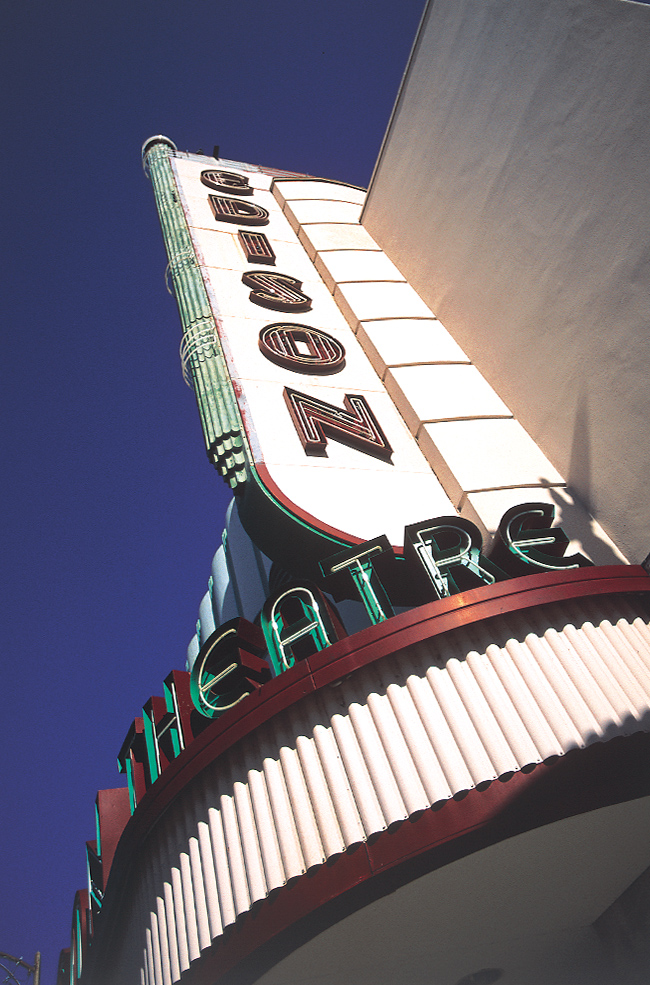
The Edison Theatre was built in 1940-1941 when its modified Art Deco style of architecture was much in vogue. Built by the Florida State Theaters, Inc. chain, the company that owned the Arcade Theatre on First Street, the Edison was in its day, the most modern theater in town. With its elegantly decorated lobby and restrooms and balcony, it was the place to go on Saturday nights.
Originally completed circa 1900, this building is unique as remains as one of Fort Myers early buildings. Although the exterior appears as one structure, it actually is comprised of two separate buildings. The front facade of the original building would have been wooden, with a second floor sleeping porch covered by a shed roof, and a simple wood railing with wood balustrades. In 1927, as part of a modernization effort, the building was significantly altered on the street elevation, including the addition of the Mediterranean Revival style front facade as seen from the street, which was much in demand at the time.
The building in the foreground stands as the first brick building downtown, as seen on the left. Note in the distance the wharves (top of picture) that extend into the Caloosahatchee. Originally, the river came to Bay Street, with nearly every north/south street extending into the river on piers.
The First National Bank Building was completed on August 17, 1914. The Neo-Classically styled bank was built on the site of Phoenix Hall, an early day community facility. The bank was chartered in January 1908, and established in the
Franklin Hardware
Originally constructed in 1937 it was the new home for the Franklin Hardware Store, previously located in the Bradford Building. The building was quite modern for the time and one of the few in Fort Myers with such clear Art Deco features. The building is particularly unique to Fort myers with its vitrolite (Carrara Glass) on the First Street facade to appear similar to Carrara marble, glassblock transom windows, and metal clad overhang. The building today looks much as it did when it was originally constructed.
One of many buildings constructed by Peter Tonnelier, the Greystone, built in 1916 replaced the former Michigan Hotel which was destroyed by fire in 1914. Upon completion, the third floor was immediately used as a hotel, with the first two floors serving a variety of uses, including the location of the Lee County Bank prior to its relocation to Main and Hendry Streets.
Built in 1911, it bears the namesake of a wealthy Tennessee cotton broker, grocer, and Civil War Colonel. Gwynne, a winter resident of Fort Myers insisted the city needed a better educational facility. Following Gwynne's death, an $8,000 donation, matching fund already collected by the community, a bond issue, and other monies raised opened the school at a final cost of $45,000.
(Multiple Businesses)
Originally built in 1989 by brothers Gilmer and Harvie E. Heitman, it was the first brick structure in the City of
Heitman-Evans
(Multiple Businesses)
In 1914 Harvie E. Heitman tore down a 40 year old structure to build what was promoted as one of the most modern hardware and sporting good stores in the country. In fact, a publication from it’s opening stated “Traveling representatives from the largest cities of the north and east (and they ought to know), say that this store has no equal in the United States, and visitors to this city seldom fail to comment upon the metropolitan appearance of the establishment.” The store opened in January 1915, at a cost of between $35,000 and $40,000. The store also boasted “a large “Otis” electric safety elevator and the very latest and modern type of fixtures…giving the place of business an appearance that cannot be matched by the best hardware stores in the largecities.”
This photo, taken around 1920 looks north from Hendry Street towards the Caloosahatchee. The building on the left is commonly known today as the old Lee County Bank Building prior to alteration in 1927.
Kress
(Multiple Businesses)
Built at a cost of $200,000, the buff brick three-story structure opened on September 18, 1928 as the S. H. Kress & Company Store. The structure was billed as the most prominent and advanced store in
Taff O. Langford built the two-story structure in 1911 between the old livery stable and the Bank of Fort Myers. It was later known as the Grand Theatre and showed pictures “that have passed by the Board of Censors and are morally clean.” In 1915 a fire threatened the
The Langford Kingston Home was built in 1919 and is an excellent example of Prairie style architecture. In fact, the Fort Myers Press reported that it was “Without question, the most modern and well-appointed dwelling in
In 1925 George Kingston purchased the home from Langford’s estate.
Originally constructed in 1925 the building cost was completed at an estimated construction cost of $30,000 and has a minimalist blend of Mediterranean Revival style, and post-classic, Chicago industrial style, both popular in the 1920's. The overall building design would accommodate a variety of uses, with the ground floor serving as office or retail, and the second floor which would likely have been more private containing either offices, hotel rooms, or as a meeting hall. Ironically, one of the first uses for the building was as a Chinese Restaurant. Although the building was altered significantly, it underwent restoration and rehabilitation in the early 2000's.
Lee
(
This building was originally constructed by James A. Hendry in 1911 and used as a general store. In 1927 it became headquarters for the Lee
Interestingly, it was in 1951 when the bank underwent remodeling that the mosaic of General Robert E. Lee and his faithful war horse Traveler were added on the Hendry Street side of the building.
The well known McCrory's store, located in the Earnhardt Building since it's construction in 1915 expanded to include this building upon completion in 1936. The building was one of few to be constructed downtown with an Art Deco flair, and today remains virtually identical to its original construction.
The home was originally built in 1901 by
Patio de Leon
(Multiple Businesses)
The Patio de Leon was the creation of Peter Tonnelier, a retired banker and businessman from
Although little is known of this building, it was constructed circa 1926 and is unique for the Oriental/Moorish stylistic influences seen. The building was designed with a symmetrical three bay elevation, with the Moorish influenced turned columns, decorative plastered horizontal banding, and prominent central bay arch. It is suspected the building may have been commissioned by George Sims, another prominent Fort Myers developer who oversaw construction of several buildings around this time period.
Post Office
(Multiple Businesses)
Constructed by developer George R. Sims, the Post Office Arcade was completed in 1925. Being an inventive developer, Sims leased a large space in the open arcade to the government as a post office at a lease rate of $1 per year. Thus, ensuring pedestrian traffic, Sims was able to lease other spaces within the arcade for premium prices. Interestingly, the arcade was the first building on
Developer Albertus A. Gardner completed this four story "skyscraper" in 1924 at a cost of $150,000. It was built primarily as a home for Royal Palm Lodge, Knights of Pythias. Its architectural style is known as Italianate Commercial, a design popular in the late 19th Century. Notice the richly-decorated cornice above the fourth floor. The building was reported to have the first elevator in town. In 1945, R.Q. Richards bought the building and opened the Richards Pharmacy.
The four-story brick structure was built as a showroom and warehouse for Virgil Robb & Harry Stucky in 1925. Their firm, known as the Robb & Stucky Furniture Company, occupied the building for 43 years. Its interior featured very high ceilings and a balcony overlooking the first floor showroom. While browsing, visitors were treated to free bottles of Coca-Cola, dispensed from a vending machine. Following a trend of businesses leaving downtown, the pioneer furniture company moved in 1968 to Colonial Boulevard.
First constructed in 1925 the building is best known as Ryals Drug Store, owned and operated by Earnest Hollis. The building had another long term established occupy its space by Parker Book Store. Major renovation occurred in the mid 1990's when the building spent many years as a restaurant, including Mama Bella's, Tropical Breeze Cafe, Downtown Fort Myers Pizza and Ricardo's Restaurant. In 2005 the building underwent significant restoration and now houses Cell Molnar & Associates, and Lit & More.
Built by Peter Tonnelier as the Tonnelier Block, the commercial building was completed in early 1915. The building was designed with the large plate glass windows on the ground floor to provide adequate space for various establishments to showcase their merchandise and services. The second floor was designed to be used for either offices or as an annex to the adjacent Michigan Hotel. Although modifications have been made to the building, restoration over the past many years hs brought it to appear much as it would have upon original completion.
Tonnelier Court
(Patio de Leon)
Tonnelier Court has been a gathering place Downtown since development began throughout 1913 to 1915. In addition to constructing most of the buildings around the court, developer Peter Tonnelier commissioned the paving of the court, which since development had planter beds and park seating. In 1915 he constructed a cement and brick aquarium that held small alligators. From then on, the north-south concourse of the court was known as “
The left foreground of the photo shows part of the aquarium. The building behind was known as the Omar Theater.
Whitehurst
(
The